The Noordereiland in Rotterdam is a very special place. It is beautiful with its little park and waterfront apartments. The view of the bridges and skyline on the other side makes you think you are in New York for a moment. And of course, because it is an island, there is water everywhere.
It is also one of the lowest-lying areas in Rotterdam and outside the dike areas.
I have seen some of the lower quays of the island become flooded in recent years. At one point, I was worried about my place being threatened by rising water levels when a particularly strong storm hit the city. Luckily, my feet stayed dry, also thanks to the effective Dutch water management.

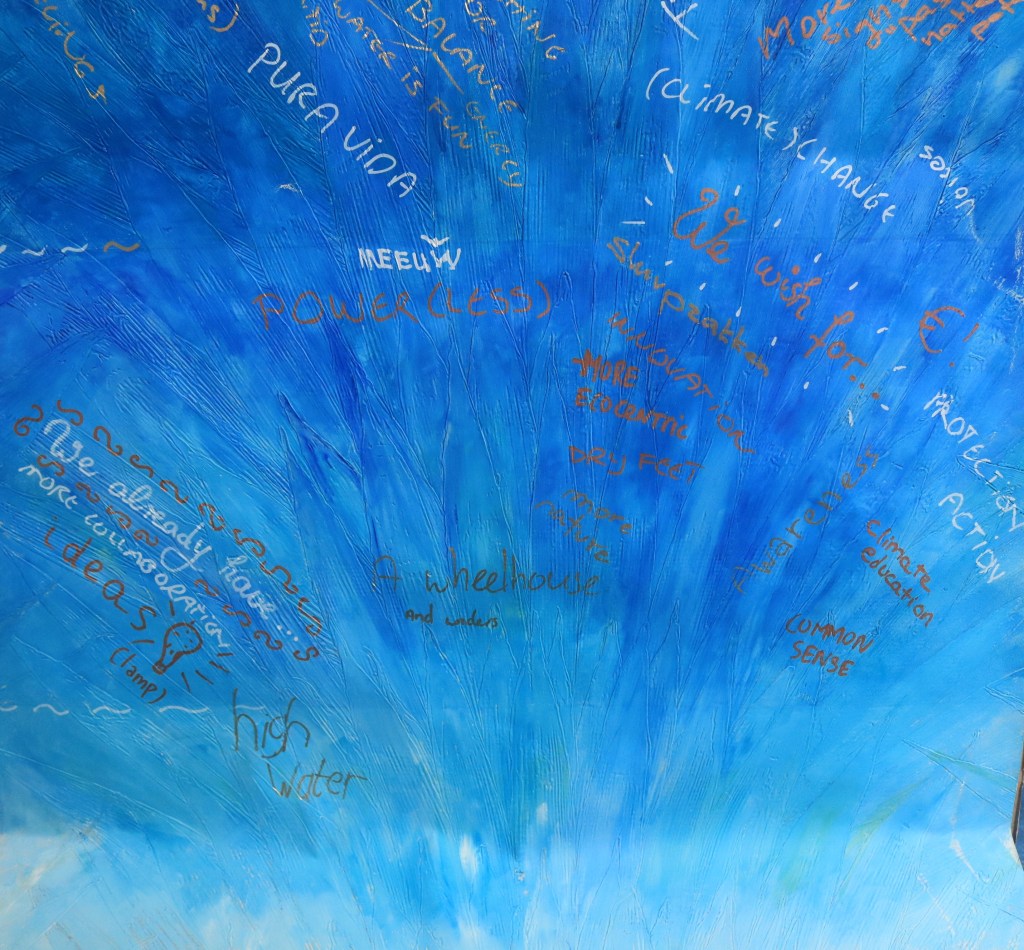

Image: Artwork without participation (left), and artwork excerpts with community voices (middle and right)
Nevertheless, with more extreme weather scenarios, we do need to think more and more about possible vulnerabilities to flooding. About creating more awareness. And about concrete action points for municipalities and other bigger actors to inform, protect and change things for the better on a larger scale. But also about concrete action points for individuals and communities to be prepared and connected.
Some time ago, the community initiative Iedereen aan Boord (All Aboard) asked me to prepare an artwork for one of their activities during the “Storm op komst” (Storm coming) festival – a month-long event around storm, water and climate between 4th of September and 2nd of October… Ending just when storm season is starting in autumn and the weather is getting rougher.
On Wednesday, 24 September, we went on a ‘High Water Walk’ on the Noordereiland.
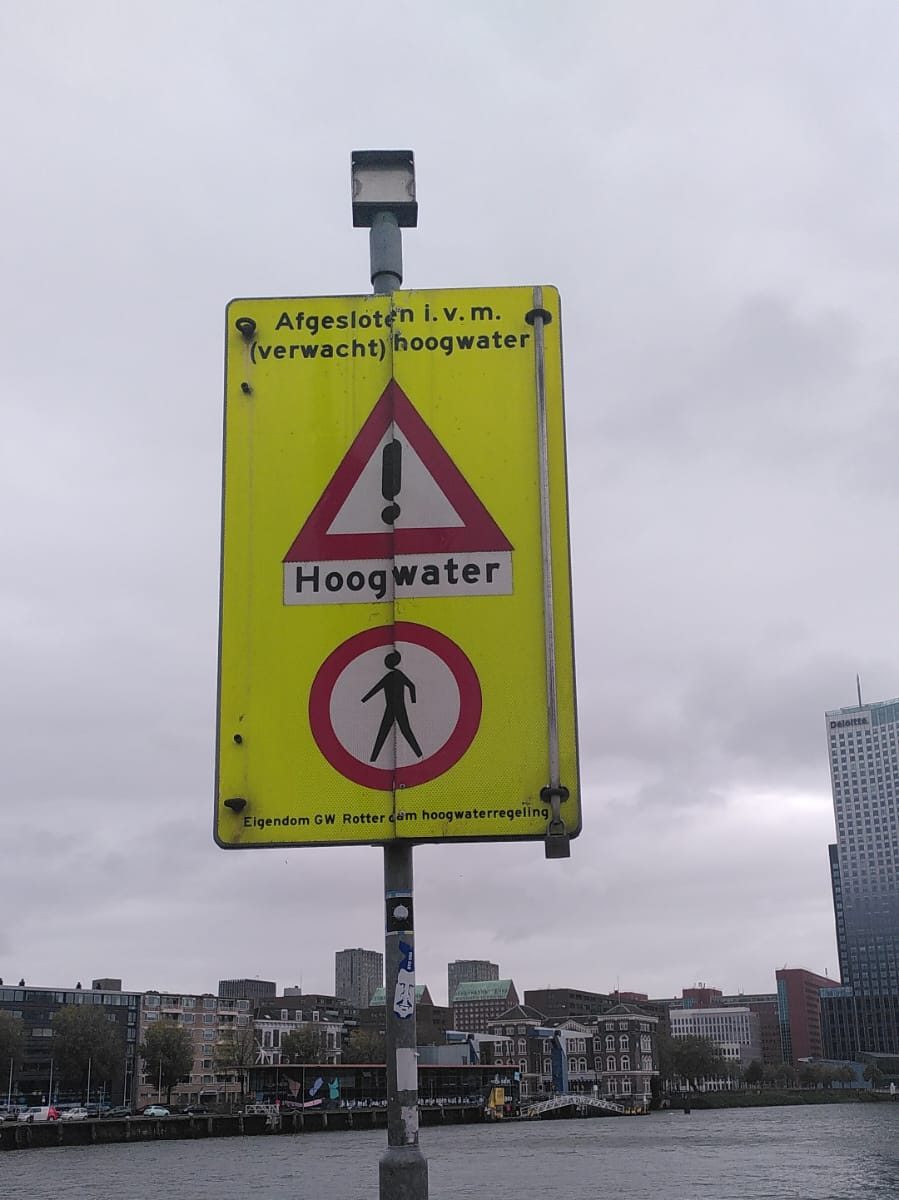
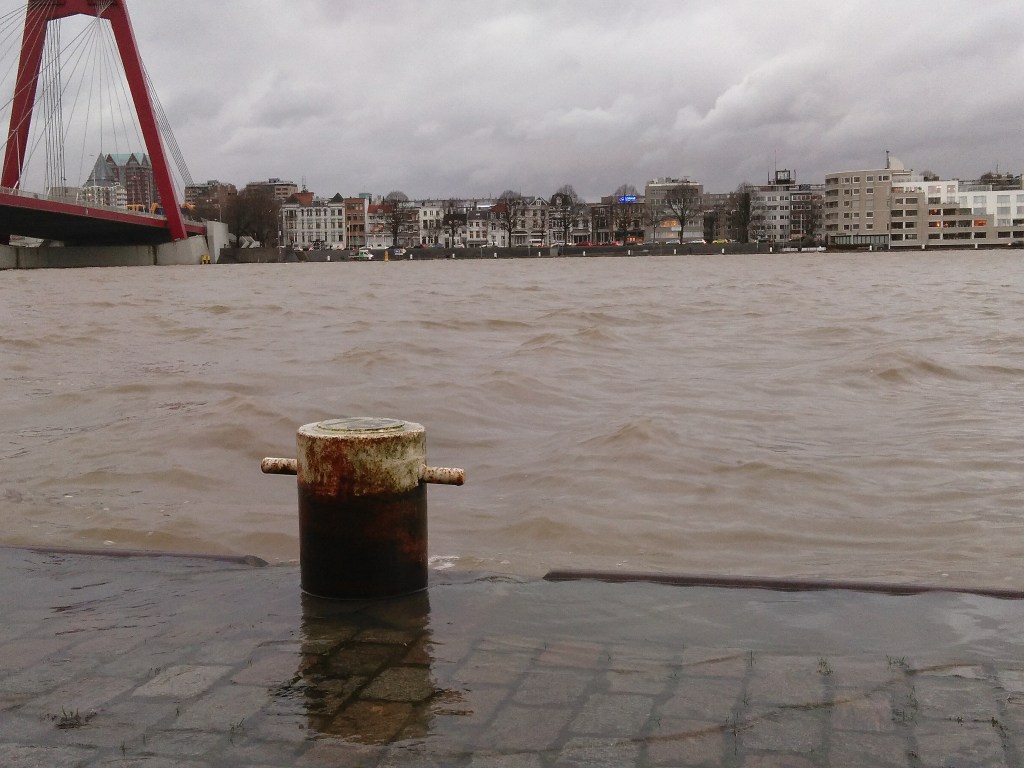
Our goal was to address flooding vulnerabilities but also to think together as a community about both available and needed resources to be able to weather the storm(s) together.
We talked about and looked at historic and future water levels for different scenarios on our island.
Along with me, I had my water artwork. Made from repurposed wallpaper, cardboard and created with water colours – fitting for the topic.
On it are different prompts for the walk participants. The idea was to turn it into a participatory piece together. How do we feel about this flooding scenario in this location? What knowledge and resources do we already have available on the island to weather the storm? What do we wish for to be able to weather the storm on our island?
During another activity at the end of the “Storm op komst” (Storm coming) event, answers were added. We feel quite safe and optimistic. But there are some mixed feelings as well, like being scared or powerless. We already have, well, high water from time to time, but also …. ideas, many ideas! Which is great! And we wish for common sense, for dry feet, for more nature, innovation, more awareness and education.
The quays are being flooded 1 to 5 times a year already, and in the future this is forecasted to happen more frequently. Cars that are parked near the quays can become damaged, basements in lower areas may flood, sandbags need to be placed in front of vulnerable areas, people need to know how to make an emergency package…
This event and the whole month-long festival around storm, water and climate, to me, showed the power of community. That addressing flooding risks on our island can only be achieved together. When people are informed. When neighbours connect. And when bigger actors are on board to communicate risks and action plans for adaptation. But of course, what we also need is mitigation and regeneration, so we don’t contribute even more to the problems… but that is a post for another time.
“Our island here is not just an island – it is a symbol for Earth.” (F.H.)
About me: I am an artist-researcher with a PhD degree in the Environmental Humanities on climate-related art (2019-2024). I research/teach and make art. Since 2014, I have been working on creative projects, such as video essays and photography with artist Daniel Schinasi (until 2021) and about him. Next to that, I am focusing on other visual projects, such as abstract art and research comics for science communication. And, of course, on writing for academics, children and anyone interested.
 Art & Human-Nature Connections
Leave a comment